

Data is everywhere in modern businesses, yet good decisions still feel difficult. Teams track metrics, review dashboards, and share reports, but clarity often remains missing. The problem is not the lack of data. It is how people think with it. Business intelligence exercises help bridge this gap. They train teams to ask better questions, challenge assumptions, and turn numbers into insight.
Instead of reacting to reports, teams learn to reason through them. These exercises strengthen analytical thinking, improve judgment, and support more confident choices. When practiced regularly, they turn data from background noise into a reliable decision tool. This article explores how business intelligence exercises improve decision-making and why they matter in real-world business environments.
Why Data Alone Does Not Improve Decisions
Many teams collect data every single day. Sales numbers, customer behavior, performance metrics, and financial reports are always available. Yet decisions still feel uncertain. Meetings end with more questions than answers. Dashboards look impressive, but direction remains unclear.
This happens because data on its own does not create insight. Numbers need structure, context, and purpose. Without clear questions, teams often focus on what is easy to measure rather than what truly matters. As a result, decisions become reactive instead of thoughtful.
Business intelligence background noise into a reliable decision-making exercises address this problem directly. They slow down the decision process and shift attention from reporting to understanding. Teams learn how to question trends, test assumptions, and explore cause and effect. Instead of guessing or relying on gut feeling, they start using evidence with intention.
Over time, this change improves decision quality. Data becomes a guide, not a distraction, and choices feel more confident and well-reasoned.

Table of Contents
What Business Intelligence Exercises Really Teach
Business intelligence exercises are not about building perfect charts or learning another tool. Their real purpose is to improve how people think with data. These exercises train teams to slow down, ask better questions, and look beyond surface-level numbers. Instead of accepting reports at face value, people learn to challenge assumptions and explore what the data is actually saying.
Over time, this mindset builds confidence. Decisions feel more balanced and less rushed. Teams stop reacting to isolated metrics and start considering context, trends, and impact. This shift leads to clearer discussions and stronger outcomes.
From Reporting Numbers to Understanding Meaning
Generic reports usually show what happened, such as revenue went up, costs went down, and traffic increased. Business intelligence exercises go a step further; they focus on why those changes occurred. By exploring patterns and causes, teams gain insight instead of just updates. This reduces confusion during reviews and helps leaders focus on actions, not just figures.
From Gut Feel to Evidence-Based Choices
Opinions can feel convincing, especially when experience is involved. BI exercises test those opinions against data. This reduces personal bias and replaces debate with clarity. As a result, trust improves across teams, and decisions feel fair, transparent, and well supported.
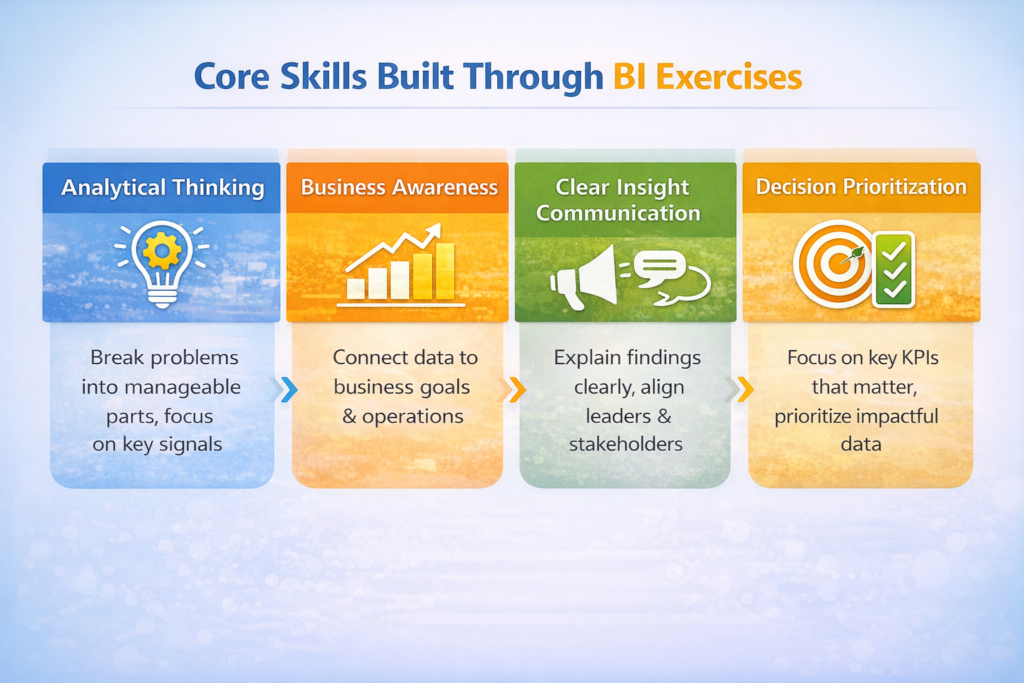
Core Skills Built Through BI Exercises
Business intelligence exercises do more than teach tools; they build practical skills that last beyond dashboards. These skills help teams analyze data, see connections, and make decisions that drive real business outcomes. Practicing BI exercises regularly turns raw numbers into actionable insights.
Analytical Thinking
BI exercises train people to break complex problems into smaller, manageable parts. Teams learn to focus on what matters most. Irrelevant noise becomes easier to ignore, while key signals stand out clearly. This structured thinking reduces mistakes and improves confidence in decision-making.
Business Awareness
Data alone is meaningless without context. Exercises help people connect numbers to customers, operations, and business goals. This understanding prevents surface-level conclusions and supports smarter planning. Teams gain insight into how each metric impacts overall strategy and daily operations.
Clear Insight Communication
Insights are only valuable when shared effectively. BI exercises teach teams to explain results in simple, clear language. Leaders and stakeholders act faster when the message is straightforward. Clear communication also reduces misunderstandings, ensuring everyone is aligned on the data story.
Decision Prioritization
Not all metrics are equally important. BI exercises guide teams to focus on the KPIs that truly matter. Prioritizing the right data improves decision quality. Meetings become shorter and more focused, and actions are more strategic. As a result, teams learn to distinguish meaningful trends from distractions.

Practical Business Intelligence Exercises for Daily Work
Effective business intelligence exercises don’t always require fancy tools or complicated setups. What matters most is consistency and a clear focus. By incorporating simple exercises into daily routines, teams can strengthen analytical skills, improve decision-making, and turn data into actionable insights.
Start With One Business Question
Every exercise should begin with a business question, not a dataset. Asking the right question keeps the analysis focused and prevents wasted effort. For example, instead of jumping into sales data, ask, “Why did online sales drop last month?” This approach guides the team to explore relevant data and ensures that insights are meaningful.
Explain One Trend in Simple Words
Pick a single trend or change in your data and explain it clearly. Avoid technical jargon or overly detailed charts. Focus on the cause of the trend and its potential impact. For instance, if customer churn increased, describe why it happened and what it might mean for marketing or support. This habit improves clarity and helps teams act on insights faster.
Test If a Metric Still Matters
Not every KPI remains relevant over time. Some metrics may lose their importance as business priorities change. Regular exercises to evaluate key metrics help teams identify which KPIs still drive meaningful decisions. This protects strategy, prevents false confidence, and ensures resources are focused on what really matters.
Simple Scenario Thinking
Scenario thinking is a straightforward way to anticipate outcomes. Change one variable in your data—for example, price, discount, or inventory level—and observe the result. This exercise develops foresight, helps teams prepare for different situations, and improves discussions around planning and strategy. By practicing scenario thinking regularly, teams become more agile and confident in their decisions.

How BI Exercises Fit Into Real Workdays
Business intelligence exercises work best when they feel like part of the daily workflow, not extra work. By integrating small, consistent activities into routines, teams can develop stronger analytical habits without feeling overwhelmed.
Individual Practice
Short, focused sessions are more effective than long, infrequent ones. Even ten minutes a day can make a difference. The key is reflection: reviewing one trend, asking one question, or testing one assumption. Over time, these small habits compound, improving confidence and decision-making skills. Individuals learn to spot patterns, question assumptions, and make data-informed choices without waiting for formal meetings or reports.
Team Discussions
When exercises are shared across a team, alignment improves naturally. Teams can discuss trends, challenge interpretations, and learn from each other’s perspectives. This collaboration reduces silos and builds trust, as everyone understands the reasoning behind insights. Regular group exercises also create a shared language for data, helping cross-functional teams work more effectively together.
Leadership Use
Leaders benefit from BI exercises too. Practicing exercises helps them clarify insights and communicate decisions more confidently. Strategy discussions become supported by data rather than relying solely on intuition. Leaders can guide teams with evidence, ensuring that data drives decisions in practice, not just in name. Consistent use of BI exercises strengthens the organization’s overall decision-making culture.

Why Business Intelligence Exercises Often Fail
Many BI exercises fail not because the concept is weak, but because focus is lost. Teams can spend time on the wrong things or treat exercises as a checkbox rather than a learning opportunity.
Too Much Attention on Tools
Teams often focus on mastering tools like Tableau or Power BI. While tools are important, they change frequently. Skills in thinking critically about data last much longer than tool expertise. The real value comes from learning how to interpret, question, and apply insights.
Measuring Everything
Some teams try to track every metric possible. More data may feel powerful, but it often creates confusion. Without prioritization, teams can get lost in numbers and miss what truly matters. BI exercises work best when they focus on key questions and meaningful metrics, not just collecting data for its own sake.
Treating Exercises as Training Only
One-time workshops or training sessions are not enough. BI exercises need regular practice to create lasting impact. Without repetition, skills fade and old habits return. Embedding exercises into daily routines, team discussions, and decision-making processes ensures that insights stick and decision quality improves over time.
Long-Term Value of Business Intelligence Exercises
Business intelligence exercises deliver benefits that grow over time. Each well-practiced exercise strengthens judgment and improves decision-making skills. Teams that engage consistently become less reactive, responding to challenges with foresight rather than instinct.
As these skills compound, organizations adapt faster to changes. Teams gain confidence in their decisions, relying on evidence rather than guesswork. Data shifts from being a burden to a trusted guide that supports strategy and planning.
Regular practice also nurtures a culture of continuous learning. Employees become more comfortable questioning assumptions, exploring trends, and identifying opportunities. Over months and years, this leads to smarter strategies, stronger performance, and reduced risk of costly mistakes.
Ultimately, BI exercises don’t just teach technical skills, they cultivate a mindset that values insight, clarity, and purposeful action. The long-term result is a team that makes faster, better decisions and drives measurable business impact.
Conclusion
Business intelligence exercises shape the way people think. They build clarity, confidence, and a stronger connection to data. When practiced regularly, decisions become faster, smarter, and less stressful. Data supports the business instead of dictating it. The strongest teams do more than analyze numbers; they understand what the data truly means.
Frequently Asked Questions (FAQ)
Business intelligence exercises are practical activities that help teams analyze, interpret, and visualize data. They improve critical thinking, decision-making, and confidence, allowing employees to transform raw data into actionable insights for smarter, evidence-based business choices.
BI exercises enhance data literacy and analytical skills. They help teams ask better questions, spot trends, reduce biases, and make informed decisions. Regular practice ensures data supports strategy, leading to faster, smarter, and more reliable business outcomes.
Yes, beginners can start with simple exercises, such as analyzing one trend or testing a KPI’s relevance. Starting small builds confidence and understanding, helping individuals gradually progress to more complex data analysis and scenario simulations.
Consistency matters more than volume. Short daily or weekly sessions help reinforce skills, promote critical thinking, and embed a data-driven mindset. Over time, regular practice compounds into better decision-making and strategic clarity across the team.
No, BI exercises can be done using simple tools like Excel, Google Sheets, or basic visualization platforms. The focus is on thinking clearly with data, interpreting results, and improving decision quality rather than mastering complex software.
BI exercises develop analytical thinking, business awareness, decision prioritization, and clear communication. Teams learn to interpret patterns, question assumptions, and explain insights effectively, improving collaboration and alignment across departments.
Regular BI practice strengthens judgment and foresight. Teams become proactive, respond with confidence, and rely on evidence rather than guesswork. Over time, this leads to smarter strategies, reduced risk, and sustained business growth.